Home | Markdown | Gemini | Microblog | Street photography
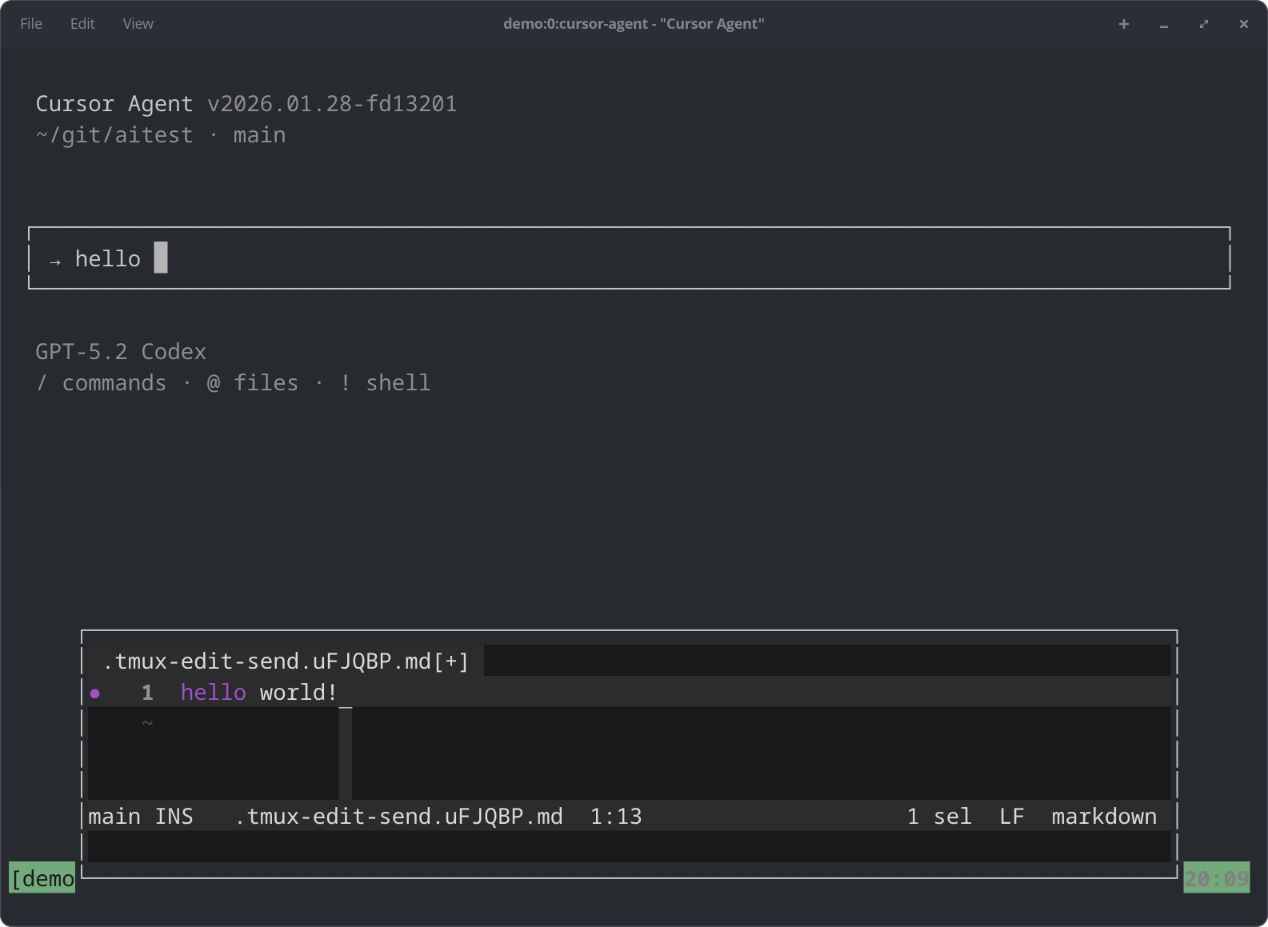
bind-key e run-shell -b "tmux display-message -p '#{pane_id}'
  > /tmp/tmux-edit-target-#{client_pid} \;
  tmux popup -E -w 90% -h 35% -x 5% -y 65% -d '#{pane_current_path}'
  \"~/scripts/tmux-edit-send /tmp/tmux-edit-target-#{client_pid}\""
┌────────────────────┐   ┌───────────────┐   ┌─────────────────────┐   ┌─────────────────────┐
│ Cursor input box   │-->| tmux keybind  │-->| popup runs script   │-->| capture + prefill   │
│ (prompt pane)      │   │ prefix + e    │   │ tmux-edit-send      │   │ temp file           │
└────────────────────┘   └───────────────┘   └─────────────────────┘   └─────────────────────┘
                                                                                 |
                                                                                 v
┌────────────────────┐   ┌────────────────────┐   ┌────────────────────┐   ┌────────────────────┐
│ Cursor input box   │<--| send-keys back     |<--| close editor+popup |<--| edit temp file     |
│ (prompt pane)      │   │ to original pane   │   │ (exit $EDITOR)     │   │ in $EDITOR         │
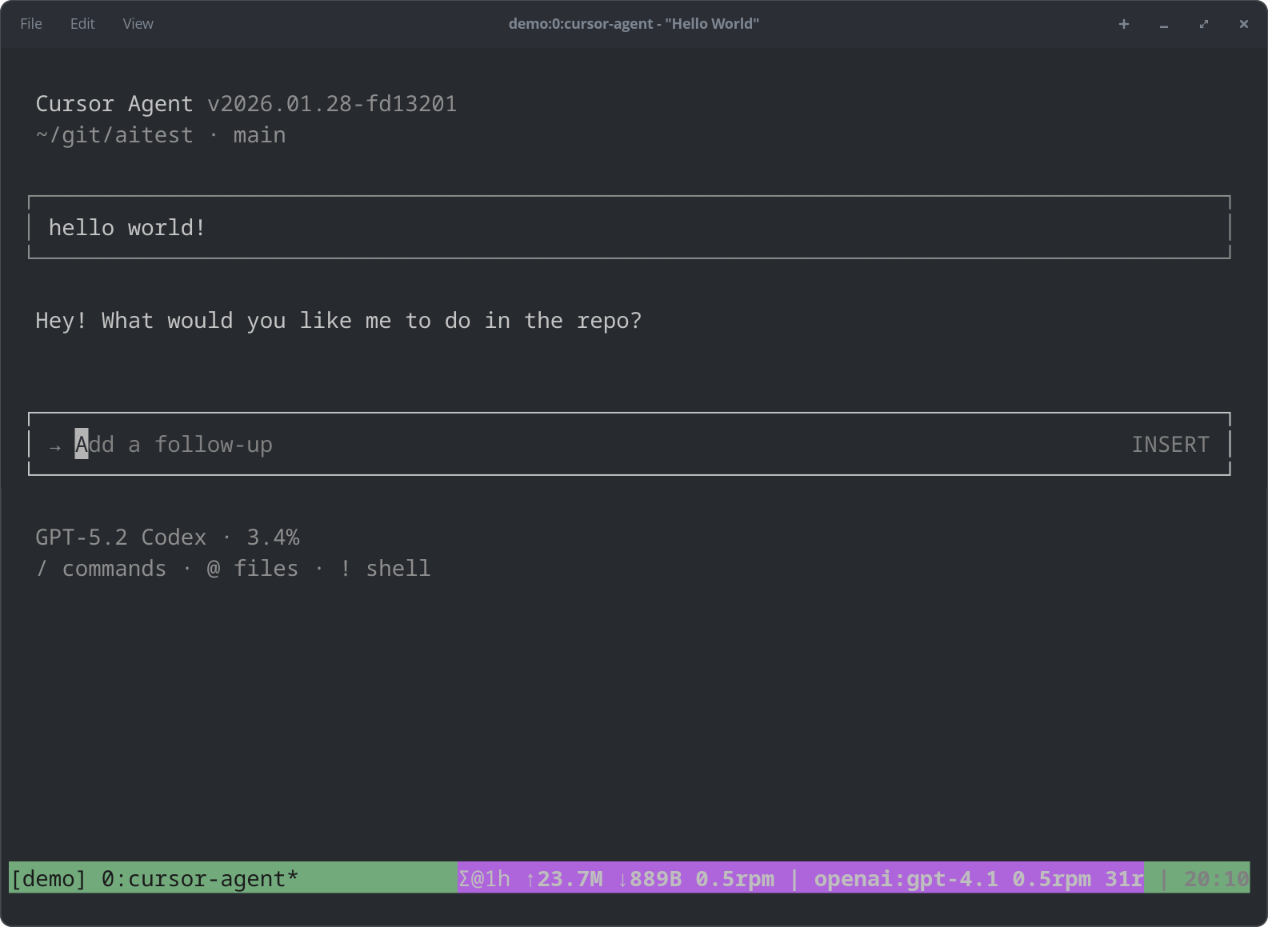
└────────────────────┘   └────────────────────┘   └────────────────────┘   └────────────────────┘
#!/usr/bin/env bash
set -u -o pipefail

LOG_ENABLED=0
log_file="${TMPDIR:-/tmp}/tmux-edit-send.log"
log() {
  if [ "$LOG_ENABLED" -eq 1 ]; then
    printf '%s\n' "$*" >> "$log_file"
  fi
}

# Read the target pane id from a temp file created by tmux binding.
read_target_from_file() {
  local file_path="$1"
  local pane_id
  if [ -n "$file_path" ] && [ -f "$file_path" ]; then
    pane_id="$(sed -n '1p' "$file_path" | tr -d '[:space:]')"
    # Ensure pane ID has % prefix
    if [ -n "$pane_id" ] && [[ "$pane_id" != %* ]]; then
      pane_id="%${pane_id}"
    fi
    printf '%s' "$pane_id"
  fi
}

# Read the target pane id from tmux environment if present.
read_target_from_env() {
  local env_line pane_id
  env_line="$(tmux show-environment -g TMUX_EDIT_TARGET 2>/dev/null || true)"
  case "$env_line" in
    TMUX_EDIT_TARGET=*)
      pane_id="${env_line#TMUX_EDIT_TARGET=}"
      # Ensure pane ID has % prefix
      if [ -n "$pane_id" ] && [[ "$pane_id" != %* ]] && [[ "$pane_id" =~ ^[0-9]+$ ]]; then
        pane_id="%${pane_id}"
      fi
      printf '%s' "$pane_id"
      ;;
  esac
}

# Resolve the target pane id, falling back to the last pane.
resolve_target_pane() {
  local candidate="$1"
  local current_pane last_pane

  current_pane="$(tmux display-message -p "#{pane_id}" 2>/dev/null || true)"
  log "current pane=${current_pane:-<empty>}"

  # Ensure candidate has % prefix if it's a pane ID
  if [ -n "$candidate" ] && [[ "$candidate" =~ ^[0-9]+$ ]]; then
    candidate="%${candidate}"
    log "normalized candidate to $candidate"
  fi

  if [ -n "$candidate" ] && [[ "$candidate" == *"#{"* ]]; then
    log "format target detected, clearing"
    candidate=""
  fi
  if [ -z "$candidate" ]; then
    candidate="$(tmux display-message -p "#{last_pane}" 2>/dev/null || true)"
    log "using last pane as fallback: $candidate"
  elif [ "$candidate" = "$current_pane" ]; then
    last_pane="$(tmux display-message -p "#{last_pane}" 2>/dev/null || true)"
    if [ -n "$last_pane" ]; then
      candidate="$last_pane"
      log "candidate was current, using last pane: $candidate"
    fi
  fi
  printf '%s' "$candidate"
}

# Capture the latest multi-line prompt content from the pane.
capture_prompt_text() {
  local target="$1"
  tmux capture-pane -p -t "$target" -S -2000 2>/dev/null | awk '
    function trim_box(line) {
      sub(/^ *│ ?/, "", line)
      sub(/ *│ *$/, "", line)
      sub(/[[:space:]]+$/, "", line)
      return line
    }
    /^ *│ *→/ && index($0,"INSERT")==0 && index($0,"Add a follow-up")==0 {
      if (text != "") last = text
      text = ""
      capture = 1
      line = $0
      sub(/^.*→ ?/, "", line)
      line = trim_box(line)
      if (line != "") text = line
      next
    }
    capture {
      if ($0 ~ /^ *└/) {
        capture = 0
        if (text != "") last = text
        next
      }
      if ($0 ~ /^ *│/ && index($0,"INSERT")==0 && index($0,"Add a follow-up")==0) {
        line = trim_box($0)
        if (line != "") {
          if (text != "") text = text " " line
          else text = line
        }
      }
    }
    END {
      if (text != "") last = text
      if (last != "") print last
    }
  '
}

# Write captured prompt text into the temp file if available.
prefill_tmpfile() {
  local tmpfile="$1"
  local prompt_text="$2"
  if [ -n "$prompt_text" ]; then
    printf '%s\n' "$prompt_text" > "$tmpfile"
  fi
}

# Ensure the target pane exists before sending keys.
validate_target_pane() {
  local target="$1"
  local pane target_found
  if [ -z "$target" ]; then
    log "error: no target pane determined"
    echo "Could not determine target pane." >&2
    return 1
  fi
  target_found=0
  log "validate: looking for target='$target' in all panes:"
  for pane in $(tmux list-panes -a -F "#{pane_id}" 2>/dev/null || true); do
    log "validate: checking pane='$pane'"
    if [ "$pane" = "$target" ]; then
      target_found=1
      log "validate: MATCH FOUND!"
      break
    fi
  done
  if [ "$target_found" -ne 1 ]; then
    log "error: target pane not found: $target"
    echo "Target pane not found: $target" >&2
    return 1
  fi
  log "validate: target pane validated successfully"
}

# Send temp file contents to the target pane line by line.
send_content() {
  local target="$1"
  local tmpfile="$2"
  local prompt_text="$3"
  local first_line=1
  local line
  log "send_content: target=$target, prompt_text='$prompt_text'"
  while IFS= read -r line || [ -n "$line" ]; do
    log "send_content: read line='$line'"
    if [ "$first_line" -eq 1 ] && [ -n "$prompt_text" ]; then
      if [[ "$line" == "$prompt_text"* ]]; then
        local old_line="$line"
        line="${line#"$prompt_text"}"
        log "send_content: stripped prompt, was='$old_line' now='$line'"
      fi
    fi
    first_line=0
    log "send_content: sending line='$line'"
    tmux send-keys -t "$target" -l "$line"
    tmux send-keys -t "$target" Enter
  done < "$tmpfile"
  log "sent content to $target"
}

# Main entry point.
main() {
  local target_file="${1:-}"
  local target
  local editor="${EDITOR:-vi}"
  local tmpfile
  local prompt_text

  log "=== tmux-edit-send starting ==="
  log "target_file=$target_file"
  log "EDITOR=$editor"

  target="$(read_target_from_file "$target_file" || true)"
  if [ -n "$target" ]; then
    log "file target=${target:-<empty>}"
    rm -f "$target_file"
  fi
  if [ -z "$target" ]; then
    target="${TMUX_EDIT_TARGET:-}"
  fi
  log "env target=${target:-<empty>}"
  if [ -z "$target" ]; then
    target="$(read_target_from_env || true)"
  fi
  log "tmux env target=${target:-<empty>}"
  target="$(resolve_target_pane "$target")"
  log "fallback target=${target:-<empty>}"

  tmpfile="$(mktemp)"
  log "created tmpfile=$tmpfile"
  if [ ! -f "$tmpfile" ]; then
    log "ERROR: mktemp failed to create file"
    echo "ERROR: mktemp failed" >&2
    exit 1
  fi
  mv "$tmpfile" "${tmpfile}.md" 2>&1 | while read -r line; do log "mv output: $line"; done
  tmpfile="${tmpfile}.md"
  log "renamed to tmpfile=$tmpfile"
  if [ ! -f "$tmpfile" ]; then
    log "ERROR: tmpfile does not exist after rename"
    echo "ERROR: tmpfile rename failed" >&2
    exit 1
  fi
  trap 'rm -f "$tmpfile"' EXIT

  log "capturing prompt text from target=$target"
  prompt_text="$(capture_prompt_text "$target")"
  log "captured prompt_text='$prompt_text'"
  prefill_tmpfile "$tmpfile" "$prompt_text"
  log "prefilled tmpfile"

  log "launching editor: $editor $tmpfile"
  "$editor" "$tmpfile"
  local editor_exit=$?
  log "editor exited with status $editor_exit"

  if [ ! -s "$tmpfile" ]; then
    log "empty file, nothing sent"
    exit 0
  fi

  log "tmpfile contents:"
  log "$(cat "$tmpfile")"

  log "validating target pane"
  validate_target_pane "$target"
  log "sending content to target=$target"
  send_content "$target" "$tmpfile" "$prompt_text"
  log "=== tmux-edit-send completed ==="
}

main "$@"